Dott had a problem.
Users would download the app, take one ride and then never use Dott again.
I wrote a successful user activation flow that addressed this churn problem by using strategic writing for UX to drive engagement, conversion, and retention.
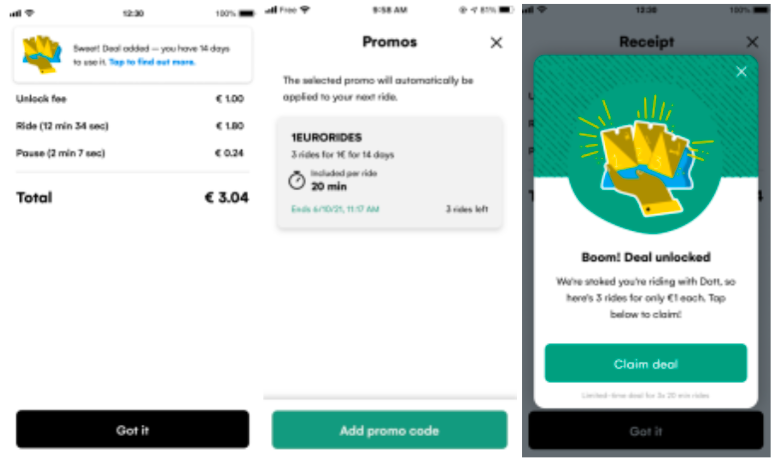
Image 1 and 2: When the user goes to end their ride and lock their vehicle (image 1), they get an in-app popup just before they’re about to lock the vehicle. It offers them a promotional deal (image 2).
Image 3: After tapping Claim deal, they get a drop-down banner on the next screen that confirms they’ve added their deal, with the option to find out the T&Cs.
After tapping the banner to view the T&Cs, they land on the promo screen giving them more information about the deal they just added to their account (as detailed as you can be with this character count).
But if they tapped ‘x’ in the second screen to ignore the deal, they receive the following push notification 3 days later (see below)…
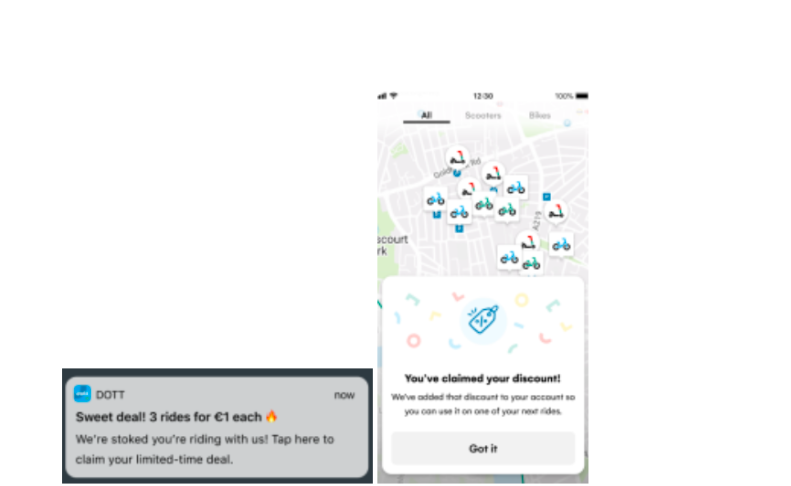
Image 1: The rider who didn’t claim the offer receives a push notification letting them know they have an offer. The fire emoji and “limited-time deal” adds urgency.
They tap the push notification.
Image 2: When they tap the notification, the app opens onto this landing screen.
The user is told that they’ve claimed their discount and they don’t have to take any further action. Tapping “Got it” clicks off the banner, leaving them on the map, ready to choose their next ride.
The results were that that 71.4% of users claimed the offer. Of those users, 63% took a second ride, and 56.4% took a 3rd ride. This also resulted in a higher user retention percentage after the 14 day period.